Yap Shu Won
ARCHITECTURAL DESIGN STUDIO 3
This studio emphasizes on the poetics of place and the experiential qualities of space in architecture.The teaching objectives of the module are to:
1. To develop awareness of a wider place, a genius loci (town, countryside, coast), and the design response towards the place.
2. To emphasize the importance of site and program in architectural design.
3. To introduce different spatial typologies in architectural design (spatial organization and relationships).
4. To emphasize the importance of section in the design of architectural space.
PROJECT 1 : Memorial Themed "Journey of the 5 Senses"
Working in groups of 4-5 students, we are to propose 2 schemes for a Memorial themed ‘journey for the 5 senses’. We are required to design the Memorials in the form of semi-open architecture by using two contrasting spatial types of our choice. There is no specific site for this design work.
-Identify and explain different spatial types in architecture, and how they inform spatial use and experience
-Create tectonic expressions of different spatial typologies which impact on the uses and experiential conditions of space
-Generate design through conscious consideration of section-plan relationship with considerations of human scale, natural light, materiality and textures
PROJECT 1 (a) : Precedent Studies : Analysing spatial poetics & spatial typologies in architecture
In groups of 4-5 students, we have to select 2 precedents for analysis. They can be local, national and/or international examples. One precedent must be PRE-MODERN MOVEMENT, and one precedent must be CONTEMPORARY. Also, one precedent must be LINEAR, and the other CONCENTRIC.
We chose Crystal Palace as our linear typology and Ribbon Chapel as our concentric typology. This is our final precedent studies about both buildings.
 Linear Typology - Crystal Palace |  Concentric Typology - Ribbon Chapel |
|---|
REFLECTION
Through project 1 (a), I have learned how to identify and explain different spatial types in architecture, as well as how they inform spatial use and experience.
PROJECT 1 (b) : ‘Journey for the 5 senses’ Memorial
Learning from the design strategies of Project 1a, we are required to design a Memorial themed the ‘journey for the five senses’.


REFLECTION
Through project 1 (b), I have learned how to create tectonic expressions of different spatial typologies which impact on the uses and experiential conditions of space. I also learned how to generate design through conscious consideration of section-plan relationship with considerations of human scale, natural light, materiality and textures.


REFLECTION
Learning from the design strategies of Project 1a, I had learned how to design a Memorial themed the ‘journey for the five senses’ using the precedent studies I had conducted for project 1.
PROJECT 2 : GENIUS LOCI: Site Analysis & Concept Development
Group work : Site conditions & analysis
In the same group from Project 1, we are required to conduct site analysis of the physical context within the identified MACRO site. We had chosen Valley of Hope, Sungai Buloh as our site.
This is our video about Sungai Buloh.
I had learned how to produce site analysis which document, interpret and analyse the physical conditions of the site and ‘genius loci’ of place and generate design based on the unique character and conditions of the site context.
Individual work :
PROJECT 3 : GENIUS LOCI: VISITOR INTERPRETIVE CENTRE (VIC)
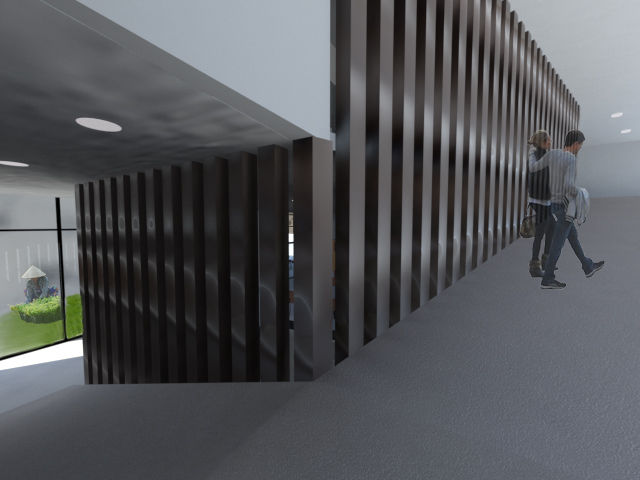
Project 3, the design brief calls for an architectural response to design AN INTERPRETIVE CENTRE emphasising a strong engagement and relationship to the site, spatial experiences and programmatic requirements.
We are required to propose a design scheme which response to the site (site topography, history and socio-cultural events), functional program and users’ experiences. Not only that, we have to generate design through conscious consideration of human scale, natural light, materials/texture including spatial quality.




REFLECTION
The learning outcome for this final project are to generate design through conscious consideration of section-plan relationship with considerations of human scale, natural light, materiality and textures. Furthermore, I learned how to to design and present a small scale community building which responds to the site (site topography, history and socio-cultural events), a functional programme and users’ experiences.